
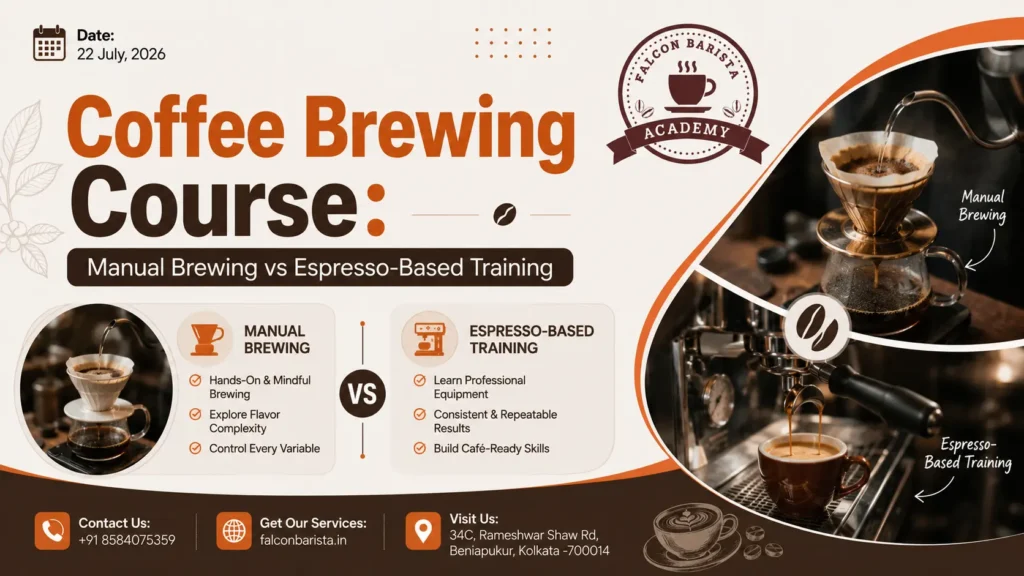
Coffee brewing has evolved from a simple daily routine into a professional skill and a growing career opportunity. With the rise of specialty cafés, premium coffee shops, hotels, restaurants, and modern hospitality businesses, trained coffee professionals are in increasing demand. For anyone planning to build a career in the coffee industry, choosing the right Coffee Brewing Course can be an important first step.
A professional Coffee Brewing Course can introduce students to different brewing methods, coffee fundamentals, equipment handling, extraction techniques, and professional beverage preparation. Two of the most important areas of coffee education are manual brewing and espresso-based training.
While manual brewing focuses on controlling the brewing process through different techniques, espresso-based training focuses on precision, speed, commercial equipment, and café-style beverage preparation. Understanding the difference between these two training approaches can help aspiring coffee professionals choose the right learning path.
For students looking for a barista course in Kolkata, a professional barista training academy in Kolkata, or a career-focused barista job oriented course, understanding manual and espresso brewing is essential.
What Is a Coffee Brewing Course?
A Coffee Brewing Course is a structured training program designed to teach students the fundamentals and techniques of preparing quality coffee. Depending on the curriculum, students may learn about coffee beans, grinding, water, extraction, brewing equipment, espresso machines, milk-based beverages, and café operations.
A professional course generally combines theory with practical learning.
| Training Area | What Students Learn |
| Coffee Fundamentals | Beans, origins, roast levels, and freshness |
| Grinding | Grind size and its effect on extraction |
| Manual Brewing | Pour-over and other brewing techniques |
| Espresso | Machine operation and extraction |
| Milk Preparation | Steaming and texturing techniques |
| Café Skills | Workflow, hygiene, and customer service |
The best learning experience usually comes from a practical curriculum that allows students to apply their knowledge through hands-on training.
Manual Brewing vs Espresso-Based Training
Manual brewing and espresso-based training are both valuable, but they develop different skills.
Manual Brewing Training
Manual brewing involves preparing coffee without relying on a commercial espresso machine. The brewing process is generally more controlled by the brewer, making precision and patience important.
Students may learn how factors such as water temperature, grind size, brewing time, coffee-to-water ratio, and pouring technique affect the final cup.
Popular Manual Brewing Methods
| Brewing Method | Key Learning Focus |
| Pour-Over | Water flow and extraction control |
| French Press | Immersion brewing and steeping |
| AeroPress | Brewing flexibility and experimentation |
| Cold Brew | Long extraction and flavour development |
Manual brewing is particularly useful for students who want to understand coffee in greater detail. It can help learners develop an appreciation for flavour, aroma, extraction, and brewing variables.
Espresso-Based Training
Espresso-based training focuses on preparing concentrated coffee using commercial espresso machines. This is one of the most important skills for professionals working in cafés and hospitality businesses.
Students can learn how to manage:
- Coffee grinding
- Dosing
- Tamping
- Espresso extraction
- Shot timing
- Machine cleaning
- Milk steaming
- Beverage preparation
Espresso training is especially valuable for individuals who want to work in commercial cafés where speed, consistency, and workflow are essential.
Key Differences Between Manual and Espresso Training
The following comparison explains the major differences between both approaches.
| Factor | Manual Brewing | Espresso-Based Training |
| Equipment | Manual brewing tools | Commercial espresso machine |
| Main Focus | Control and flavour exploration | Speed and consistency |
| Brewing Time | Usually longer | Usually faster |
| Skill Development | Precision and experimentation | Technical operation and workflow |
| Career Use | Specialty coffee and brewing roles | Cafés, hotels, restaurants, and coffee shops |
| Learning Style | Detailed and experimental | Fast-paced and practical |
Both methods can be valuable parts of a complete Coffee Brewing Course.
Which Training Is Better for a Professional Career?
There is no single answer because the right choice depends on your career goals.
If you are interested in coffee flavours, specialty brewing, and detailed extraction techniques, manual brewing can provide a strong foundation. If your goal is to work in cafés, hotels, restaurants, or commercial coffee businesses, espresso-based training may be particularly important.
For students who want wider career opportunities, learning both methods can be a stronger option.
Why Combined Training Can Be Beneficial
A complete training program can help students understand different aspects of coffee preparation.
| Skill | Manual Brewing | Espresso Training |
| Coffee Knowledge | Strong | Strong |
| Extraction Understanding | High | High |
| Commercial Café Skills | Limited | Essential |
| Specialty Coffee Knowledge | Strong | Strong |
| Speed and Workflow | Moderate | Essential |
| Beverage Variety | Moderate | High |
Learning both approaches can give students a broader understanding of the coffee industry.
Why Choose a Professional Barista Training Academy in Kolkata?
The Kolkata location provides a strong environment for students interested in coffee and hospitality careers. The city has a growing café culture and a wide range of restaurants, hotels, cafés, and food and beverage businesses.
Choosing a professional barista training academy in Kolkata can allow students to gain industry-focused skills while learning in a convenient location.
The Importance of Certified Trainers
Learning from certified trainers can help students understand both the technical and practical aspects of coffee preparation. Trainers can help correct mistakes, explain extraction principles, demonstrate equipment handling, and guide students through professional workflows.
Professional trainer guidance can help students improve:
- Coffee preparation techniques
- Equipment handling
- Brewing consistency
- Milk preparation
- Customer service
- Café workflow
How a Barista Job Oriented Course Supports Career Launch
A barista job oriented course is designed to help students develop skills that can be useful in real workplace environments.
A career-focused course may include:
| Career Preparation Area | Benefit |
| Practical Training | Builds technical confidence |
| Equipment Handling | Prepares students for commercial environments |
| Beverage Preparation | Develops professional service skills |
| Hygiene Training | Supports workplace standards |
| Communication | Improves customer interaction |
| Placement Assistance | Helps students explore career opportunities |
Placement assistance can also support students as they prepare for potential employment opportunities. While career outcomes depend on individual skills and performance, professional training can help create a stronger foundation for a successful career launch.

What Career Opportunities Can Follow Coffee Training?
After completing professional coffee training, students may explore opportunities in different sectors.
| Industry | Potential Roles |
| Cafés | Barista and Senior Barista |
| Hotels | Coffee and Food & Beverage Roles |
| Restaurants | Beverage Preparation Positions |
| Specialty Coffee Shops | Coffee Professional |
| Resorts | Hospitality and Beverage Roles |
| Coffee Businesses | Brewing and Service Positions |
The career path can develop further with experience, additional certifications, and continuous learning.
Choose the Right Coffee Brewing Course for Your Goals
Manual brewing and espresso-based training are not competing skills. Instead, they represent two important areas of professional coffee education.
Manual brewing helps students understand extraction, flavour, brewing variables, and precision. Espresso-based training develops commercial equipment skills, speed, consistency, and café workflow.
For anyone planning to build a professional career in the coffee industry, learning both can provide a more complete understanding of coffee preparation.
If you are searching for a barista course in Kolkata, looking for a professional barista training academy in Kolkata, or interested in a barista job oriented course, choosing a Coffee Brewing Course with a practical curriculum and career-focused training can be an important step.
With guidance from certified trainers, hands-on practice, industry-relevant education, and placement assistance, aspiring coffee professionals can begin developing the skills needed for their career launch.

Frequently Asked Questions
1. What is taught in a Coffee Brewing Course?
A Coffee Brewing Course may cover coffee fundamentals, grinding, extraction, manual brewing, espresso preparation, milk steaming, equipment handling, hygiene, and café operations.
2. Is manual brewing better than espresso brewing?
Neither method is universally better. Manual brewing focuses on detailed extraction and flavour control, while espresso training focuses on commercial equipment, speed, consistency, and café workflow.
3. Can beginners join a Coffee Brewing Course?
Yes. Beginners can join a structured course to learn coffee fundamentals and practical brewing techniques step by step.
4. Why is espresso training important for baristas?
Espresso is the foundation of many popular café beverages. Professional espresso training helps students understand commercial machines, extraction, grinding, dosing, and beverage preparation.
5. Is a barista course in Kolkata useful for a hospitality career?
Yes. Professional training can help students develop practical coffee and café skills that may be useful for careers in cafés, hotels, restaurants, resorts, and other hospitality businesses.
6. What is a barista job oriented course?
A barista job oriented course focuses on practical, workplace-relevant skills designed to help students prepare for potential employment opportunities in the coffee and hospitality industry.
7. Why should I choose a barista training academy in Kolkata?
A professional academy in the Kolkata location can provide structured training, practical learning, certified trainer guidance, and career-focused education for aspiring coffee professionals.
8. Does professional barista training include placement assistance?
Some career-focused training programs may provide placement assistance to help students understand potential career opportunities and prepare for their professional journey.
9. Can learning manual brewing help my barista career?
Yes. Manual brewing can improve your understanding of coffee extraction, flavour, brewing variables, and precision, which can complement professional espresso skills.