
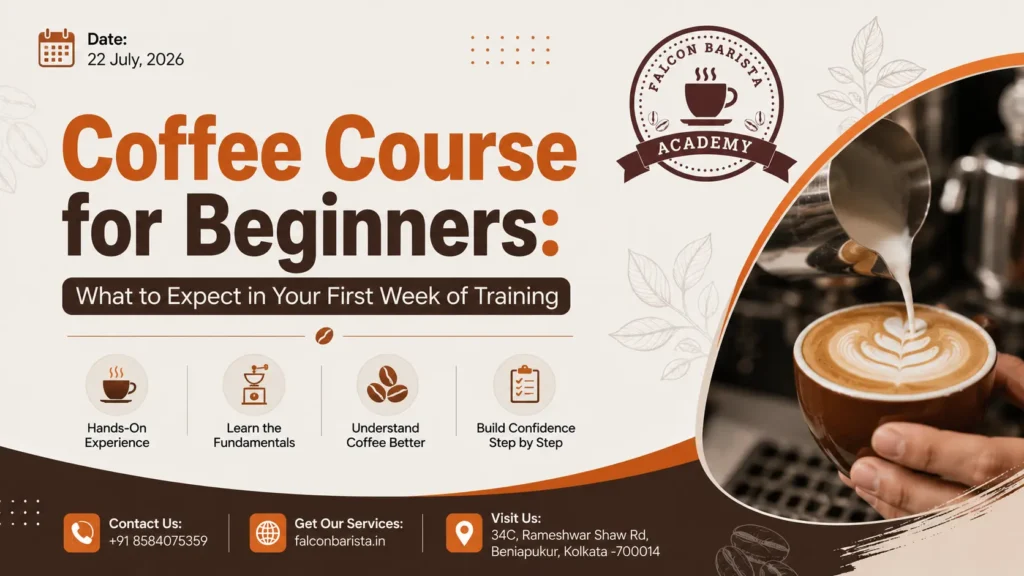
Starting a professional career in the coffee industry can be an exciting experience, especially for beginners who are passionate about coffee and hospitality. However, many students are unsure about what they will learn during their first week of training. Will they only learn how to prepare coffee? Will they work with professional equipment? Is prior experience necessary?
A professional coffee course is designed to answer these questions through structured education and practical training. The first week usually focuses on building a strong foundation before students move on to more advanced techniques.
From understanding coffee bean varieties and learning about grinder types to practising basic espresso extraction and following essential safety protocols, the first week can introduce beginners to the fundamental skills required in the coffee industry.
Whether you are exploring professional barista classes, searching for a coffee making course in Kolkata, or considering a specialised latte art course, knowing what to expect can help you begin your training with greater confidence.
What Happens During the First Week of a Coffee Course?
The first week of a professional coffee course generally focuses on the basics. Students are introduced to coffee, equipment, workplace standards, and fundamental preparation techniques.
The exact schedule may vary depending on the training program, but beginners can generally expect a combination of theory, demonstrations, and practical activities.
| Training Area | Main Focus |
| Coffee Knowledge | Understanding beans and flavour |
| Equipment | Learning grinders and coffee machines |
| Espresso | Understanding basic extraction |
| Safety | Following workplace safety protocols |
| Practical Training | Applying techniques under guidance |
The goal is to create a strong foundation before students begin advanced beverage preparation.
Day 1: Introduction to Coffee and the Training Environment
The first day often begins with an introduction to the coffee industry and the professional training environment.
Students may learn about the role of a barista, the importance of consistency, customer service, cleanliness, and professional behaviour.
Understanding Coffee Bean Varieties
One of the first topics beginners may explore is the difference between major coffee bean varieties.
| Bean Variety | General Characteristics |
| Arabica | Often associated with complex flavours and aroma |
| Robusta | Known for stronger body and higher caffeine content |
| Blends | Combine different beans for specific flavour profiles |
Students may also learn how origin, altitude, roasting, and processing can influence the characteristics of coffee.
This basic knowledge helps beginners understand that coffee flavour depends on multiple factors.

Day 2: Understanding Coffee Equipment and Grinder Types
After learning the basics of coffee, students are usually introduced to the equipment used in professional coffee preparation.
The grinder is one of the most important pieces of equipment in coffee preparation because grind size directly affects extraction.
Common Grinder Types
| Grinder Type | Common Use |
| Blade Grinder | Basic grinding applications |
| Burr Grinder | More consistent coffee grinding |
| Commercial Grinder | Professional café environments |
Beginners may learn how to adjust grind settings and understand why different brewing methods require different grind sizes.
Why Grind Size Matters
A grind that is too fine or too coarse can affect the final taste of the coffee. During a professional coffee course, students can gradually understand how grind size influences brewing time and extraction.
This knowledge becomes particularly important when students begin working with espresso machines.
Day 3: Learning Basic Espresso Extraction
One of the most important stages of beginner training is learning basic espresso extraction.
Espresso preparation requires attention to several factors, including:
- Coffee dose
- Grind size
- Distribution
- Tamping
- Extraction time
- Beverage consistency
The Basic Espresso Workflow
Beginners may learn a simple professional workflow:
- Grind the coffee
- Measure the required dose
- Distribute the coffee evenly
- Tamp correctly
- Lock the portafilter into the machine
- Begin extraction
- Observe the result
- Adjust the technique when necessary
The purpose of early espresso training is not simply to make coffee quickly. Students must understand how different variables can influence the final cup.

Day 4: Safety Protocols and Professional Hygiene
Safety is an essential part of professional coffee education. A coffee shop environment includes hot water, steam, electrical equipment, glassware, and heavy machinery.
For this reason, students are introduced to important safety protocols.
Important Safety Practices
| Safety Area | Example |
| Hot Equipment | Handle steam wands and hot surfaces carefully |
| Electrical Equipment | Follow proper operating procedures |
| Wet Floors | Clean spills quickly to reduce slipping risks |
| Cleaning Chemicals | Follow correct handling instructions |
| Equipment Cleaning | Use proper cleaning procedures |
Students may also learn about personal hygiene, workstation cleanliness, equipment maintenance, and safe workplace habits.
These practices are important for both professional performance and workplace safety.
Day 5: Practical Review and Beginner Skill Development
By the end of the first week, students may begin combining the skills they have learned.
A practical review may include:
- Identifying different coffee beans
- Adjusting grinder settings
- Preparing coffee for basic brewing
- Practising espresso preparation
- Following safety procedures
- Maintaining a clean workstation
This stage helps students understand how individual skills connect within a professional coffee workflow.
What Beginners Should Not Expect in Week One
A professional coffee course is designed for gradual learning. Beginners should not expect to master every technique within the first few days.
Skills That Take Time to Develop
Espresso Consistency
Producing consistent espresso requires practice. Small changes in grind size, dose, or technique can affect the result.
Milk Steaming
Milk steaming requires control and coordination. Students typically need repeated practice to develop proper texture and temperature awareness.
Latte Art
A professional latte art course may teach advanced pouring techniques, but beginners usually need to develop basic milk-steaming skills first.
Speed and Workflow
Professional speed develops with practice. Beginners should focus on accuracy and correct technique before trying to work faster.

How Barista Classes Help Beginners Build Confidence
Professional barista classes can provide a structured learning environment where students can practise skills under guidance.
Instead of trying to learn everything independently, students can receive demonstrations, corrections, and practical feedback.
| Beginner Challenge | How Training Helps |
| Confusing equipment | Trainer demonstrations |
| Inconsistent coffee | Guided practice |
| Incorrect grinding | Grind-size explanation |
| Espresso mistakes | Technique correction |
| Safety concerns | Proper protocols |
This can help beginners develop confidence gradually.
Choosing a Coffee Making Course in Kolkata
For students looking for a coffee making course in Kolkata, it is important to consider the structure and practical focus of the program.
A good training course should ideally include:
- Practical equipment training
- Coffee fundamentals
- Espresso preparation
- Grinder education
- Workplace hygiene
- Safety protocols
- Trainer guidance
- Career-focused learning
The right course can help beginners move from basic knowledge to practical confidence step by step.
What Should You Bring to Your First Week?
Beginners do not need to know everything before starting a coffee course. However, a positive attitude and willingness to practise can make the learning experience more productive.
| What to Bring | Why It Matters |
| Notebook | Record important techniques |
| Comfortable Clothing | Supports practical training |
| Focus | Helps during demonstrations |
| Patience | Skills improve with practice |
| Curiosity | Encourages better learning |
Final Thoughts
The first week of a coffee course is primarily about building a strong foundation. Beginners can expect to learn about coffee bean varieties, grinder types, basic espresso extraction, equipment handling, and safety protocols.
Students may also begin developing practical skills that support future training in milk preparation, latte art, manual brewing, and professional café operations.
Whether you are considering professional barista classes, searching for a coffee making course in Kolkata, or planning to join a specialised latte art course, the first week is an important stage in your learning journey.
With structured training, regular practice, and the right guidance, beginners can gradually develop the knowledge and confidence required to move forward in the professional coffee industry.

Frequently Asked Questions
1. What is taught in the first week of a coffee course?
The first week generally covers coffee fundamentals, coffee bean varieties, grinder types, equipment handling, basic espresso extraction, hygiene, and safety protocols.
2. Can beginners join barista classes without experience?
Yes. Beginner-focused barista classes are designed to introduce students to coffee preparation and professional equipment step by step.
3. What are coffee bean varieties?
Coffee bean varieties refer to different types of coffee plants and beans, such as Arabica and Robusta, which can have different flavour, aroma, and caffeine characteristics.
4. Why are grinder types important in coffee preparation?
Different grinder types and grind settings can affect the consistency of coffee grounds and influence the extraction process.
5. What is basic espresso extraction?
Basic espresso extraction involves preparing a concentrated coffee beverage by controlling factors such as grind size, dose, tamping, and extraction time.
6. Is a coffee making course in Kolkata suitable for beginners?
Yes. A structured coffee making course in Kolkata can help beginners develop fundamental coffee knowledge and practical preparation skills.
7. When do students learn latte art?
Latte art is usually introduced after students understand basic milk steaming and texturing techniques. Advanced skills require regular practice.
8. Are safety protocols important in barista training?
Yes. Safety protocols help students understand how to work responsibly with hot equipment, steam, electrical appliances, cleaning products, and other café equipment.
9. Do I need prior coffee knowledge before joining a coffee course?
No. Many beginner-level courses are designed to introduce students to coffee fundamentals from the beginning.